China imposes curbs on beef imports to protect domestic industry

By Daphne Zhang, Ella Cao and Liz Lee

BEIJING/SAO PAULO, Dec 31 (Reuters) - China will impose an added 55% tariff on beef imports that exceed quota levels from key suppliers including Brazil, Australia and the U.S. in a move to protect its domestic cattle industry.

China's commerce ministry said on Wednesday the total import quota ​for 2026 for countries covered under its new "safeguard measures" is 2.7 million metric tons, roughly in line with the record 2.87 million tons it imported overall in 2024.

The new ‌annual quota levels are lower than import levels for the first 11 months of 2025 for top supplier Brazil, and Australia.

"The increase in the amount of imported beef has seriously damaged China's domestic industry," the ministry said in announcing ‌the measure following an investigation launched last December.

The measure takes effect on January 1 for three years, with the total quota set to increase annually.

Beef imports to China fell 0.3% in the first 11 months of 2025 to 2.59 million tons.

Chinese beef imports will decline in 2026 as a result of the measures, said Hongzhi Xu, senior analyst at Beijing Orient Agribusiness Consultants.

"China's beef-cattle farming is not competitive compared with countries such as Brazil and Argentina. This cannot be reversed in the short term through technological advancements or institutional reforms," Xu said.

Quota Volume 2026 2027 2028 Actual imports from

(1,000 tons) Jan-Nov 2025

Brazil 1,106 1,128 1,151 1,329

Argentina 511 521 532 436

Uruguay 324 331 337 188

New Zealand 206 210 214 110

Australia 205 209 213 295

United States 164 168 171 55

Other 172 175 179

countries/region

Total 2,688 2,742 2,797

Additional 55% 55% 55%

Tariff Rate

In 2024, China ⁠imported 1.34 million tons of beef from Brazil, 594,567 tons from ‌Argentina, 243,662 tons from Uruguay, 216,050 tons from Australia, 150,514 tons from New Zealand, and 138,112 tons from the U.S..

In the first 11 months of this year, Brazil shipped 1.33 million tons of beef to China, according to Chinese customs data, higher than the 1.1 million tons set under Beijing's new ‍measures.

Also this year, Australian shipments to China have surged, gaining share at the expense of U.S. beef after Beijing in March allowed permits to expire at hundreds of American meat plants and as President Donald Trump unleashed a tit-for-tat tariff war. U.S. shipments stood at just 55,172 tons through November, less than half the 2024 levels.

Australian beef exports to China stood at 294,957 tons in the first 11 months of 2025.

"We have ​made it clear to China that Australian beef is not a risk to their beef sector, and that we expect our status as a valued Free Trade Agreement partner to ‌be respected," Australian Trade Minister Don Farrell told Reuters on Thursday, calling China's decision "disappointing".

The Australian government and beef industry were working closely to determine the full implications of the measure, Agriculture Minister Julie Collins said in an email reply to Reuters.

BEEF SHORTAGE

China's move comes as a global beef shortage pushes up prices in many parts of the world, including to record highs in the U.S..

Responding to Beijing's announcement, Mark Thomas, chair of the Western Beef Association in Australia, said: "There's plenty of other countries that will take our product."

Luis Rua, secretary at Brazil's agriculture ministry, said there is no reason "to panic", telling Reuters that the government can negotiate "compensatory measures" with China to offset the impact of the new tariffs.

In a telephone interview, Rua also mentioned Brazil's ability to redirect beef exports ⁠to other countries.

Brazilian industry groups, on the other hand, expressed concern.

In 2025, Chinese imports of Brazilian beef totalled ​approximately 1.7 million tons, equivalent to some 48% of the volume exported by Brazil overall, beef lobby group Abiec ​said in a statement.

"Given this scenario, adjustments will become necessary throughout the entire supply chain, from production to export, to avoid broader impacts," Abiec noted.

Another major Brazilian beef lobby group Abrafrigo said the potential impact of China's safeguard measures could mean a loss of up to $3 billion in export revenue for Brazil ‍in 2026.

This year, Brazil's total beef export revenues are ⁠estimated at $18 billion, Abrafrigo said.

DOMESTIC PROTECTION

China made its announcement following two extensions of its beef import probe, which officials say does not target any particular country.

The tariffs will help curb the decline in China's breeding cow inventory and buy time for domestic beef enterprises to make adjustments and upgrades, said Zengyong Zhu, a research fellow of the Institute ⁠of Animal Science of the Chinese Academy of Agricultural Sciences.

Beijing has stepped up policy support for the beef sector this year and said in late November that cattle farming had been profitable for seven consecutive months.

(Reporting by Liz Lee, ‌Shi Bu, Daphne Zhang, Ella Cao; Additional reporting by Helen Clark in Perth and Christine Chen in Sydney, Gabriel Araujo and Ana Mano in Sao Paulo and ‌Rodrigo Viga Gaier in Rio de Janeiro. Editing by Tony Munroe, Gareth Jones and Jan Harvey)

China imposes curbs on beef imports to protect domestic industry

By Daphne Zhang, Ella Cao and Liz Lee BEIJING/SAO PAULO, Dec 31 (Reuters) - China will impose an added 55% tarif...
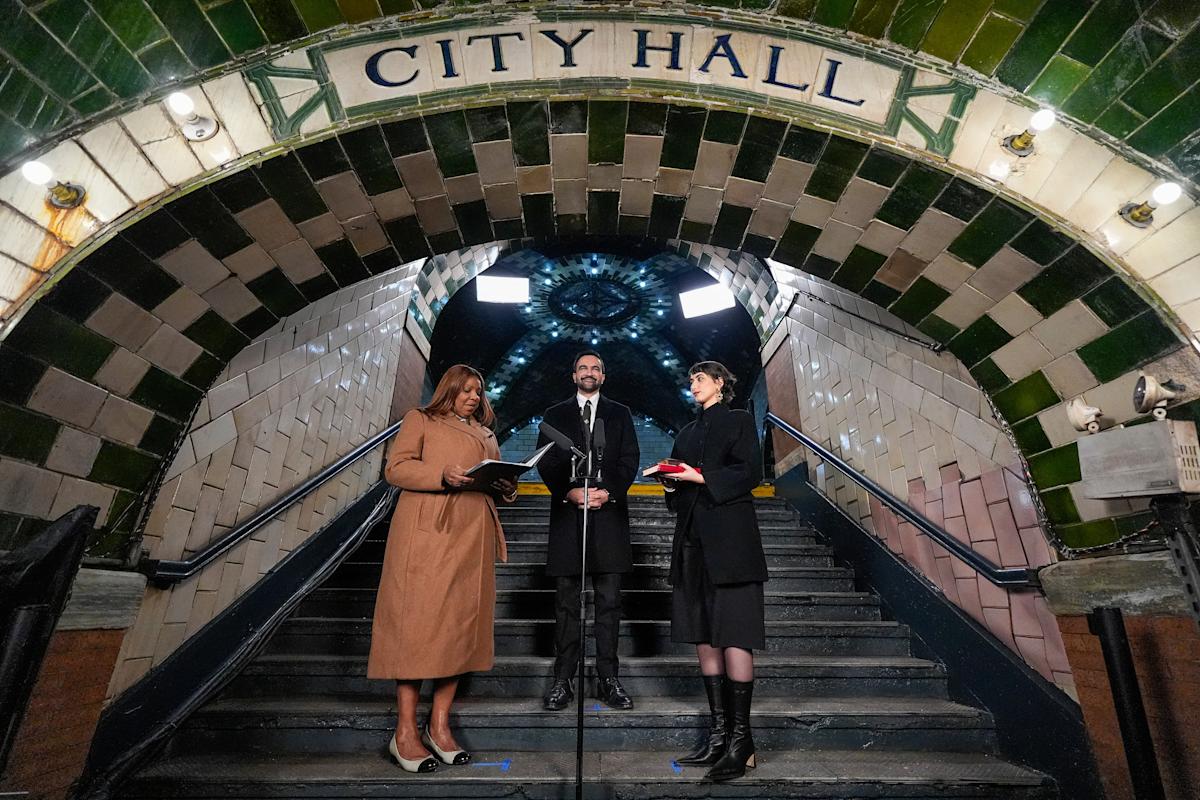
Mayor-elect Zohran Mamdani takes the oath of office during a swearing-in ceremony in the Old City Hall subway station, in New York, on January 1, 2026. - Yuki Iwamura/AP

Zohran Mamdani, the democratic socialist who campaigned on a promise to tackle the affordability crisis in one of America's most expensive cities, was sworn in as New York City's 112th mayor early Thursday.

Mamdani, a 34-year-old immigrant from Uganda, makes history as the city's first Muslim mayor, first South Asian mayor and the youngest mayor to hold the high-profile office in more than a century.

"This is truly the honor and the privilege of a lifetime," Mamdani said moments after being sworn in.

The former state assemblyman from Queens captured the world's attention and stunned the political establishment with his win in the Democratic primary last summer, runninga campaign focused on affordability: He promised to create a universal childcare program, freeze the rent for roughly two million rent-stabilized tenants and make city buses "fast and free."

New York Attorney General Letitia James, left, administers the oath of office to mayor-elect Zohran Mamdani, center, as his wife Rama Duwaji looks on, on January 1. - Yuki Iwamura/AP

Mamdani was sworn just after midnight during a private ceremony alongside his wife, artistRama Duwaji. His parents, filmmaker Mira Nair and Mahmood Mamdani, a professor at Columbia University, were also in attendance.

New York State Attorney General Letitia James, who Mamdani has described as a "political inspiration," administered the oath of office.

The setting was symbolic. Mamdani was sworn in on the platform of the old City Hall subway station underneath City Hall Park in Manhattan – an architectural marvel where tiled, arched ceilings, colored glass skylights and brass chandeliers have laid dormant since the station was shuttered in 1945.

The location, which is closed to the public except for the occasional guided tour,is one of New York's 28 original subway stations that opened in 1904, ushering in a new dawn of innovation and growth in New York City.

The typically dormant City Hall subway station, seen here in 2004, played host to Zohran Mamdani's private swearing-in. - Mike Segar/Reuters

Following his swearing in, Mamdani spoke about the significance of the setting, calling it "a testament to the importance of public transit to the vitality, the health and the legacy of our city."

He also announced Michael Flynn, a longtime city planner, as the city's next Department of Transportation Commissioner.

Mamdani has made public transportation a central focus of his agenda. In addition to proposing to make city buses free, he has said his administration would expand the city's bicycle lane network and optimize streets for pedestrians.

A public ceremony will be held at City Hall Plaza on Thursday afternoon. At least 4,000 people are expected to attend, including high-profile leaders of the progressive movement: DemocraticRep. Alexandria Ocasio-Cortezwill introduce Mamdani, and the public oath of office will be administered by independent Vermont Sen. Bernie Sanders.

New York Mayor Zohran Mamdani speaks after taking the oath of office inside the the Old City Hall subway station, New York, on January 1. - Yuki Iwamura/AP

A block party hosted by Mamdani's transition team – dubbed the "Inauguration of a New Era" – will line Broadway, with supporters of the new mayor gathering outside the gates of City Hall.

Mamdani's ambitious agenda has drawn some skepticism. He has proposed taxing the wealthy to pay for his proposals, something he can only do with the support of the state legislature and the governor. And while Mamdani is taking office at a time of general economic strength in the city, the high cost of living is squeezing working-class New Yorkers.

The dawn of Mamdani's administration also comes as thenational Democratic Partyis wrestling with its identity and struggling to energize a divided base.Mamdani's winhas fueled debate about whether the party should move further to the left and focus on affordability as its primary issue in the upcoming midterm elections.

This story has been updated with additional information.

For more CNN news and newsletters create an account atCNN.com

Zohran Mamdani is sworn in as mayor of New York City

Zohran Mamdani, the democratic socialist who campaigned on a promise to tackle the affordability crisis in one of America's most expens...
Volunteer in Iran's Revolutionary Guard reportedly killed during widening protests

DUBAI, United Arab Emirates (AP) — A volunteer member of Iran's paramilitary Revolutionary Guard was killed in a western province duringwidening demonstrations sparked by the Islamic Republic's ailing economy, authorities said Thursday, marking the first fatality among security forces during the protests.

The death Wednesday night of the 21-year-old volunteer in the Guard's Basij force may mark the start of a heavier-handed response by Iran's theocracy over the demonstrations, which have slowed in the capital, Tehran, but expanded to other provinces.

The state-run IRNA news agency reported on the Guard member's death but did not elaborate. An Iranian news agency called the Student News Network, believed to be close to the Basij, directly blamed demonstrators for the Guard member's death, citing comments from Saeed Pourali, a deputy governor in Iran's Lorestan province.

The Guard member "was martyred ... at the hands of rioters during protests in this city in defense of public order," he reportedly said. Another 13 Basij members and police officers suffered injuries, he added.

"The protests that have occurred are due to economic pressures, inflation and currency fluctuations, and are an expression of livelihood concerns," Pourali said. "The voices of citizens must be heard carefully and tactfully, but people must not allow their demands to be strained by profit-seeking individuals."

The protests took place in the city of Kouhdasht, over 400 kilometers (250 miles) southwest of Tehran.

Iran's civilian government under reformist President Masoud Pezeshkian has been trying to signal it wants to negotiate with protesters. However, Pezeshkian has acknowledged there is not much he can do as Iran's rial currency has rapidly depreciated, with $1 now costing some 1.4 million rials.

Meanwhile, state television separately reported on the arrests of seven people, including five it described as monarchists and two others it said had linked to European-based groups. State TV also said another operation saw security forces confiscate 100 smuggled pistols, without elaborating.

The protests have become the biggest in Iran since 2022, when the death of22-year-old Mahsa Aminiin police custody triggered nationwide demonstrations. However, the demonstrations have yet to be countrywide and have not been as intense as those surrounding the death of Amini, who was detained over not wearing her hijab, or headscarf, to the liking of authorities.

Iran's theocracy had declared Wednesday a public holiday across much of the country, citing cold weather, likely as a bid to get people out of the capital for a long weekend. The Iranian weekend is Thursday and Friday, while Saturday marks Imam Ali's birthday, another holiday for many.

The protests, taking root in economic issues, have heard demonstrators chant against Iran's theocracy as well. The country's leaders are still reeling after Israel launched a12-day waragainst the country in June. The U.S. also bombed Iranian nuclear sites during the war.

Iran has said it isno longer enriching uraniumat any site in the country, trying to signal to the West that it remains open to potential negotiations over its atomic program to ease sanctions. However, those talks have yet to happen as U.S. President Donald Trump and Israeli Prime Minister Benjamin Netanyahu havewarned Tehran against reconstituting its atomic program.

Volunteer in Iran's Revolutionary Guard reportedly killed during widening protests

DUBAI, United Arab Emirates (AP) — A volunteer member of Iran's paramilitary Revolutionary Guard was killed in a west...
Zohran Mamdani sworn in as New York City mayor at historic subway station

NEW YORK (AP) — Zohran Mamdani became mayor of New York City just after midnight Thursday, taking the oath of office at an historic, decommissioned subway station in Manhattan.

Mamdani, a Democrat, was sworn in as the first Muslim leader of America's biggest city, placing his hand on a Quran as he took his oath.

"This is truly the honor and the privilege of a lifetime," Mamdani said in a brief speech.

The ceremony, administered by New York Attorney General Letitia James, a political ally, took place at the old City Hall station, one of the city's original subway stops that is known for its stunning arched ceilings.

In Mamdani's first speech as mayor, he said the old subway station was a "testament to the importance of public transit to the vitality, the health and the legacy of our city" as he announced the appointment of his new Department of Transportation commissioner, Mike Flynn.

The new mayor then closed: "Thank you all so much, now I will see you later," he said with a smile before heading up a flight of stairs.

Mamdani will be sworn in again, in grander style, in a public ceremony at City Hall at 1 p.m. by U.S. Sen. Bernie Sanders, one of the mayor's political heroes. That will be followed by what the new administration is billing as a public block party on a stretch of Broadway known as the "Canyon of Heroes," famous for its ticker-tape parades.

Mamdani now beginsone of the most unrelenting jobsin American politics as one of the country's most-watched politicians.

In addition to being the city's first Muslim mayor, Mamdani is also its first of South Asian descent and the first to be born in Africa. At 34, Mamdani is also the city's youngest mayor in generations.

In a campaign that helped make "affordability" a buzzword across the political spectrum, the democratic socialist promised to bring transformative change with policies intended to lower the cost of living in one of the world's most expensive cities. His platform included free child care, free buses, a rent freeze for about 1 million households, and a pilot of city-run grocery stores.

But he will also have to face other responsibilities: handling trash and snow and rats, while getting blamed for subway delays and potholes.

Mamdani was born in Kampala, Uganda, the son of filmmaker Mira Nair and Mahmood Mamdani, an academic and author. His family moved to New York City when he was 7, with Mamdani growing up in a post-9/11 city where Muslims didn't always feel welcome. He became an American citizen in 2018.

He worked on political campaigns for Democratic candidates in the city before he sought public office himself, winning a state Assembly seat in 2020 to represent a section of Queens.

Mamdani andhis wife, Rama Duwaji, will depart theirone-bedroom, rent stabilized apartmentin the outer-borough to take up residence in the stately mayoral residence in Manhattan.

Mamdani inherits a city on the upswing, after years of slow recovery from the COVID-19 pandemic. Violent crime has dropped to pre-pandemic lows. Tourists are back. Unemployment, which soared during the pandemic years, is also back to pre-COVID levels.

Yet deep concerns remain about high prices and rising rents in the city.

He'll also have to deal with Republican President Donald Trump.

During the mayoral race, Trump threatened to withhold federal funding from the city if Mamdani won and mused about sending National Guard troops to the city.

But Trump surprised supporters and foes alike by inviting the Democrat to the White House forwhat ended up beinga cordial meeting in November.

"I want him to do a great job and will help him do a great job," Trump said.

Still, tensions between the two leaders are almost certain to resurface, given their deep policy disagreements, particularly over immigration.

Mamdani also faces skepticism and opposition from some members of the city's Jewish community over his criticisms of Israel's government.

The new mayor and his team have spent the weeks since his election victory preparing for the transition, surrounding Mamdani with seasoned hands who have worked inside or alongside city government.

That included persuading the city's police commissioner, Jessica Tisch, to remain in her position — a move that helped calm fears in the business community that the administration might be planning radical changes in policing strategy.

Zohran Mamdani sworn in as New York City mayor at historic subway station

NEW YORK (AP) — Zohran Mamdani became mayor of New York City just after midnight Thursday, taking the oath of office at a...
China imposes curbs on beef imports to protect domestic industry

By Daphne Zhang, Ella Cao and Liz Lee

BEIJING/SAO PAULO, Dec 31 (Reuters) - China will impose an added 55% tariff on beef imports that exceed quota levels from key suppliers including Brazil, Australia and the U.S. in a move to protect its domestic cattle industry.

China's commerce ministry said on Wednesday the total import quota ​for 2026 for countries covered under its new "safeguard measures" is 2.7 million metric tons, roughly in line with the record 2.87 million tons it imported overall in 2024.

The new ‌annual quota levels are lower than import levels for the first 11 months of 2025 for top supplier Brazil, and Australia.

"The increase in the amount of imported beef has seriously damaged China's domestic industry," the ministry said in announcing ‌the measure following an investigation launched last December.

The measure takes effect on January 1 for three years, with the total quota set to increase annually.

Beef imports to China fell 0.3% in the first 11 months of 2025 to 2.59 million tons.

Chinese beef imports will decline in 2026 as a result of the measures, said Hongzhi Xu, senior analyst at Beijing Orient Agribusiness Consultants.

"China's beef-cattle farming is not competitive compared with countries such as Brazil and Argentina. This cannot be reversed in the short term through technological advancements or institutional reforms," Xu said.

Quota Volume 2026 2027 2028 Actual imports from

(1,000 tons) Jan-Nov 2025

Brazil 1,106 1,128 1,151 1,329

Argentina 511 521 532 436

Uruguay 324 331 337 188

New Zealand 206 210 214 110

Australia 205 209 213 295

United States 164 168 171 55

Other 172 175 179

countries/region

Total 2,688 2,742 2,797

Additional 55% 55% 55%

Tariff Rate

In 2024, China ⁠imported 1.34 million tons of beef from Brazil, 594,567 tons from ‌Argentina, 243,662 tons from Uruguay, 216,050 tons from Australia, 150,514 tons from New Zealand, and 138,112 tons from the U.S..

In the first 11 months of this year, Brazil shipped 1.33 million tons of beef to China, according to Chinese customs data, higher than the 1.1 million tons set under Beijing's new ‍measures.

Also this year, Australian shipments to China have surged, gaining share at the expense of U.S. beef after Beijing in March allowed permits to expire at hundreds of American meat plants and as President Donald Trump unleashed a tit-for-tat tariff war. U.S. shipments stood at just 55,172 tons through November, less than half the 2024 levels.

Australian beef exports to China stood at 294,957 tons in the first 11 months of 2025.

"We have ​made it clear to China that Australian beef is not a risk to their beef sector, and that we expect our status as a valued Free Trade Agreement partner to ‌be respected," Australian Trade Minister Don Farrell told Reuters on Thursday, calling China's decision "disappointing".

The Australian government and beef industry were working closely to determine the full implications of the measure, Agriculture Minister Julie Collins said in an email reply to Reuters.

BEEF SHORTAGE

China's move comes as a global beef shortage pushes up prices in many parts of the world, including to record highs in the U.S..

Responding to Beijing's announcement, Mark Thomas, chair of the Western Beef Association in Australia, said: "There's plenty of other countries that will take our product."

Luis Rua, secretary at Brazil's agriculture ministry, said there is no reason "to panic", telling Reuters that the government can negotiate "compensatory measures" with China to offset the impact of the new tariffs.

In a telephone interview, Rua also mentioned Brazil's ability to redirect beef exports ⁠to other countries.

Brazilian industry groups, on the other hand, expressed concern.

In 2025, Chinese imports of Brazilian beef totalled ​approximately 1.7 million tons, equivalent to some 48% of the volume exported by Brazil overall, beef lobby group Abiec ​said in a statement.

"Given this scenario, adjustments will become necessary throughout the entire supply chain, from production to export, to avoid broader impacts," Abiec noted.

Another major Brazilian beef lobby group Abrafrigo said the potential impact of China's safeguard measures could mean a loss of up to $3 billion in export revenue for Brazil ‍in 2026.

This year, Brazil's total beef export revenues are ⁠estimated at $18 billion, Abrafrigo said.

DOMESTIC PROTECTION

China made its announcement following two extensions of its beef import probe, which officials say does not target any particular country.

The tariffs will help curb the decline in China's breeding cow inventory and buy time for domestic beef enterprises to make adjustments and upgrades, said Zengyong Zhu, a research fellow of the Institute ⁠of Animal Science of the Chinese Academy of Agricultural Sciences.

Beijing has stepped up policy support for the beef sector this year and said in late November that cattle farming had been profitable for seven consecutive months.

(Reporting by Liz Lee, ‌Shi Bu, Daphne Zhang, Ella Cao; Additional reporting by Helen Clark in Perth and Christine Chen in Sydney, Gabriel Araujo and Ana Mano in Sao Paulo and ‌Rodrigo Viga Gaier in Rio de Janeiro. Editing by Tony Munroe, Gareth Jones and Jan Harvey)

China imposes curbs on beef imports to protect domestic industry

By Daphne Zhang, Ella Cao and Liz Lee BEIJING/SAO PAULO, Dec 31 (Reuters) - China will impose an added 55% tarif...
Image: Chief Justice John Roberts (Tom Williams / CQ-Roll Call via Getty Images)

WASHINGTON — Chief Justice John Roberts scrupulously avoided touching on contentious issues facing judges at a time of widespread discord within the federal judiciary in his annual end-of-year report Wednesday.

Roberts'seven-page statementfocused mostly on the history of the Declaration of Independence even as judges have faced harsh criticism this year for ruling against Trump administration policies amid a period of rising violent threats.

Addressing his colleagues in the judiciary, Roberts said it is the duty of everyone in government to live up to the ideals of the 1776 declaration that paved the way to American independence and expressed confidence in the sturdiness of the Constitution.

"Those of us in the Third Branch must continue to decide the cases before us according to our oath, doing equal right to the poor and to the rich, and performing all of our duties faithfully and impartially under the Constitution," he wrote.

Roberts, whoearlier in the yearpushed back on President Donald Trump over a call to impeach judges simply for ruling against him, did not directly address that issue or the threats that have prompted some judges tochange their daily lives.

Judges have alsocriticized Robertsand the court as a whole for not doing enough to defend them.

Roberts didaddress threatsand other challenges facing judges in his 2024 report, issued before Trump took office.

In his latest report, Roberts did make some oblique references to topics of particular salience in 2025. He noted, for example the importance of judicial independence, citing the Declaration of Independence's mention of how Great Britain's King George III exercised too much control over the judiciary.

"The Constitution corrected this flaw, granting life-tenure and salary protections to safeguard the independence of federal judges and ensure their ability to serve as a counter-majoritarian check on the political branches," Roberts wrote. "This arrangement, now in place for 236 years, has served the country well."

Roberts also remarked that an early attempt to impeach a Supreme Court justice, Samuel Chase, failed in the Senate because "many senators concluded that disapproval of a judge's decisions provided an invalid basis for removal from office."

The Supreme Court will issue a series of rulings on contentious Trump policies in the coming months, including his sweeping tariffs and his attempt to end automatic birthright citizenship.

Chief Justice John Roberts dodges contentious issues in year-end message to judiciary

WASHINGTON — Chief Justice John Roberts scrupulously avoided touching on contentious issues facing judges at a time of widespread discord w...
Taiwan's president pledges to defend island's sovereignty after China's military drills

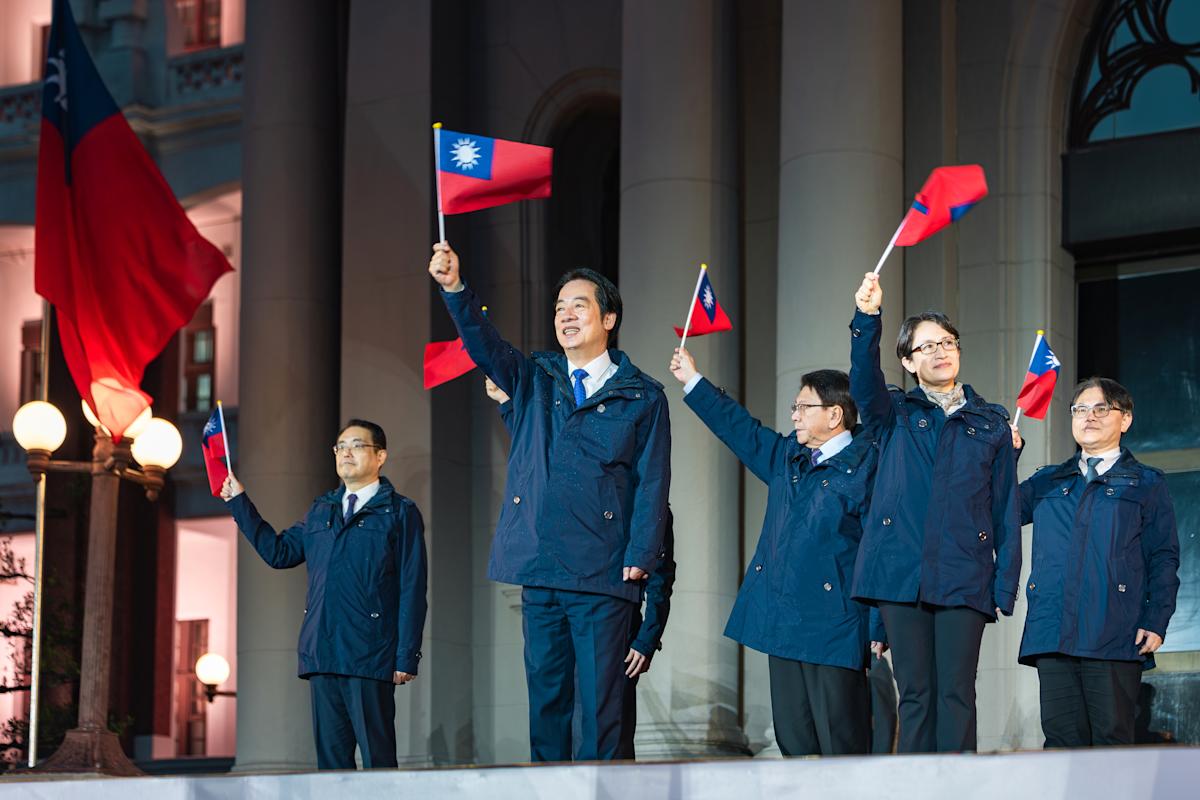
TAIPEI, Taiwan (AP) — Taiwanese President Lai Ching-te on Thursday vowed to defend the self-ruled island's sovereignty in the face of China's "expansionist ambitions," days after Beijing wrapped uplive-fire military drillsaround the island.

"In the face of China's rising expansionist ambitions, the international community is watching to see whether the Taiwanese people have the resolve to defend themselves," Lai said in his New Year's address.

"As president, my stance has always been clear: to firmly safeguard national sovereignty, strengthen national defense and the resilience of the whole society, and comprehensively construct an effective deterrence and democratic defense mechanism," he added.

Lai's comments came days after China wrapped up live-fire drills around Taiwan featuring rocket launches, aircraft and warships. Beijing had expressed anger at a plannedU.S. arms sales to Taiwan, as well as at Japan's new leader's comments thatTokyo could intervenein the event of a Chinese attack on Taiwan.

The planned arms sale, valued at more than $11 billion, is the U.S.'s largest so far to Taiwan. It includes missiles, drones, artillery systems and military software.

The United States is obligated by its own laws to provide Taiwan with the means to defend itself. China claims the self-ruled island as its own territory and threatens to annex it, by force if necessary.

China's leader Xi Jinping on Wednesday reiterated those threats in his own televised New Year's address, calling an eventual annexation "unstoppable."

Taiwan last year announced a special $40 billion budget for arms purchases, including to build an air defense system with high-level detection and interception capabilities called the Taiwan Dome.

The budget will be allocated over eight years, from 2026 to 2033, and comes after Lai alreadypledged to raise defense spendingto 5% of the island's GDP, as part of his strategy amid China's threats of invasion.

"Facing China's serious military ambitions, Taiwan has no time to wait," Lai said.

Mistreanu reported from Beijing.

Taiwan’s president pledges to defend island’s sovereignty after China’s military drills

TAIPEI, Taiwan (AP) — Taiwanese President Lai Ching-te on Thursday vowed to defend the self-ruled island's sovereignt...


VINCE JRNL © 2015 | Distributed By My Blogger Themes | Designed By Templateism.com